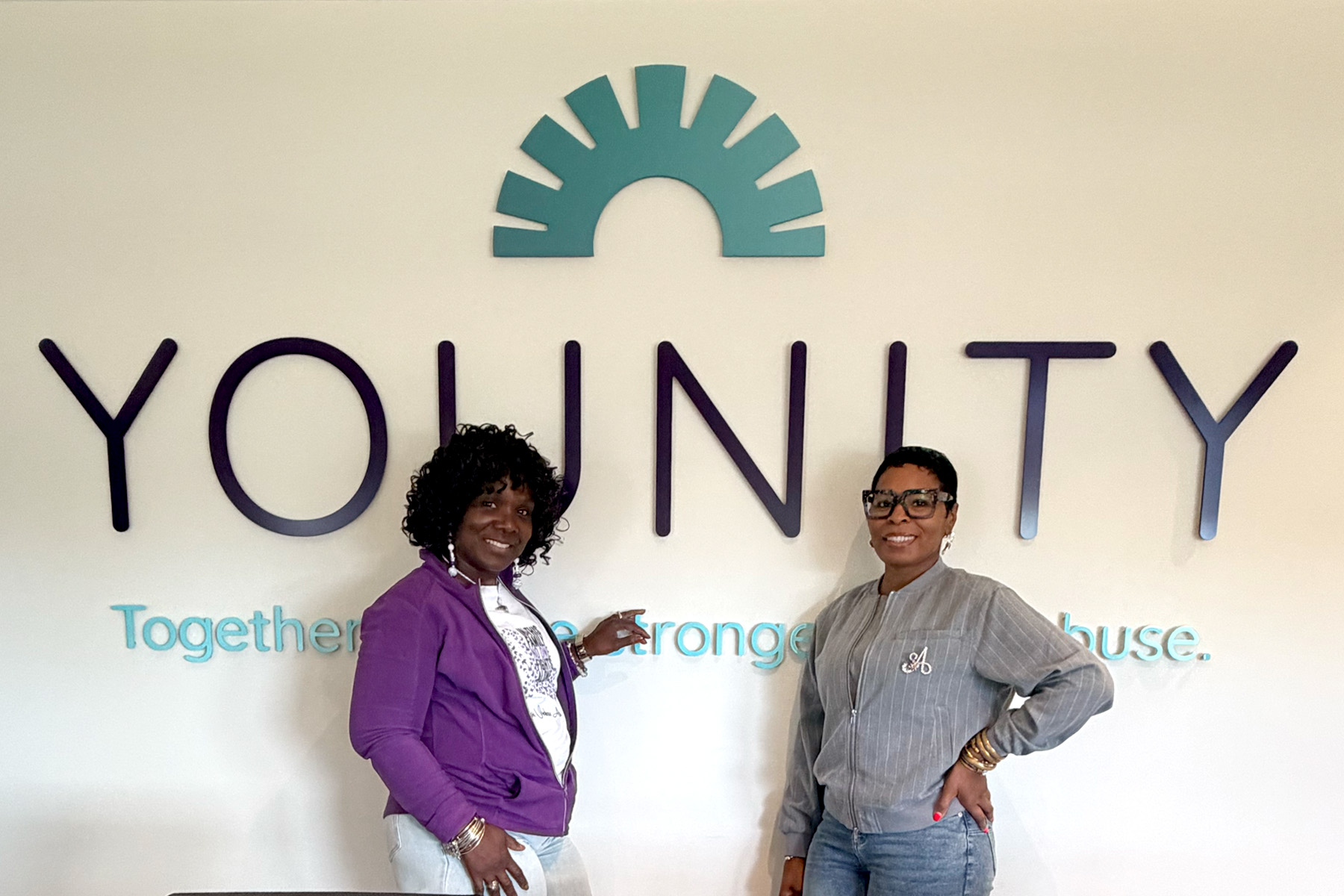
Meet the people behind Younity’s Crisis Response Teams of Mercer County
At two in the morning, someone sitting in a police station after experiencing domestic violence may be exhausted, frightened, and unsure what happens next. Their children may be beside them. They may have questions they cannot yet put into words.
When a Younity advocate enters the room, the conversation begins with what that person needs. It might be a glass of water, a blanket, or a few minutes to decompress. Before explaining resources or discussing next steps, the advocate takes time to listen.
“At that moment, we’re not giving them anything but our time and our compassion,” Varonda Kendrick said.
Varonda, Younity’s Director of Response Teams & Outreach, and Adia Allen, its Domestic Violence Response Team Coordinator, work with local law enforcement, hospitals, and approximately 50 active volunteer advocates. Together with staff, they provide an in-person response to victim-survivors of domestic and sexual violence, 24 hours a day, seven days a week.
The difference a listening ear makes
For Adia, advocacy begins with listening. Sometimes a person needs to talk through what happened. Sometimes they need someone to sit beside them while they gather their thoughts.
Some people have questions about the Safe House, counseling, safety planning, or the restraining order process. Others are unsure what they need. Advocates give them room to talk, ask questions, or simply take a moment, offering support that responds to where they are.
Both Adia and Varonda know that someone in crisis may be taking in more than they can absorb. They do not need to make every decision during that first conversation. Whatever they decide, they leave knowing they have someone to call when they need support.
Understanding what others may not see
Both Varonda and Adia hear a familiar question from people outside an abusive relationship: Why doesn’t the person just leave?
A survivor may have no independent income, nowhere to go, or children whose needs they are trying to protect. Abuse may have damaged their credit, disrupted their employment, or separated them from family and friends. They may still love their partner and hope the person they first knew will return.
“Just leave,” Adia said, is advice that overlooks a difficult reality: “It’s not that easy.”
Before becoming an advocate, Varonda recalls encouraging a friend in a way she later recognized could feel like blame. Training changed how she listened and helped her understand that even well-intentioned questions can make someone less willing to seek support.
Today, advocates help survivors explore what is possible in their circumstances, including safety planning for someone who remains in a relationship.
Fifty advocates, a shared commitment
Younity’s Response Teams show up in person, whether a call comes in the middle of the night, on a weekend, or during a holiday.
Varonda describes volunteers who fill scheduling gaps and step in when colleagues need help. Together with staff, they maintain coverage around the clock, including when several calls arrive close together. If a volunteer is unavailable, a staff member responds.
Sometimes survivors apologize for calling late at night or taking an advocate away from home during a holiday. Adia wants them to know they do not need to apologize. Advocates have chosen to be there, and offering support when someone needs it is why they do this work.
“It’s an honor,” she said.
For Adia, being trusted enough to sit beside someone during such a difficult moment is a privilege. She may not be able to change what happened, but she can listen, offer comfort, and help them consider what they need next.
Compassion, strengthened by training
Varonda describes volunteers who give their time because they want to help. Training prepares them for the responsibility of sitting beside someone in crisis.
Younity’s advocate training includes 64 hours of free instruction covering domestic and sexual violence, crisis intervention, and the organization’s services. Advocates also receive continued guidance and resources as they begin responding to calls.
For Varonda, that preparation includes recognizing personal assumptions and setting them aside. An advocate’s beliefs about what someone “should” do cannot become another burden for a person experiencing trauma.
Recognizing danger that may be unseen
Sometimes, the most serious injuries are the ones an advocate cannot see. Strangulation can leave no visible marks while causing life-threatening internal injuries. A survivor may not recognize the danger or understand why they need urgent medical attention, even when they feel okay.
From January through September 2026, Younity’s Crisis Response Teams responded to 80 call-outs involving strangulation, a 60 percent increase over the same period in 2025. The increase reflects training that prepares advocates to ask survivors specifically about strangulation, helping identify experiences that might otherwise go unrecognized.
Under Varonda’s leadership, Younity’s Response Teams help survivors of strangulation and smothering understand the risks. Through New Jersey’s BREATHE Protocol, advocates work alongside law enforcement and forensic nurse examiners to address the survivor’s medical needs and safety.
Advocates explain what a forensic examination involves, help survivors access urgent medical care, and offer safety planning. They stay with the survivor through what can be a frightening, overwhelming experience.
A difference they may never see
Advocates often do not learn what happens after a call. Occasionally, they get a glimpse.
Adia recalled meeting a survivor whose situation had been deeply distressing. Months later, they met again. This time, the woman had news to share: she was working, had her own home, and had been reunited with her children. Adia spoke about the joy of seeing her moving forward.
When a survivor thanks Younity for changing their life, Varonda brings the conversation back to what that person has accomplished. She recognizes the work they have done and the trust they placed in Younity along the way. The advocates were there to support them, but they took the next steps themselves.
During Domestic Violence Awareness Month, Younity recognizes Varonda, Adia, and the advocates who answer these calls. Much of their work happens out of public view, late at night or in a quiet room at a police station or hospital.
For the person sitting beside an advocate, that conversation may be the first time they can talk about what happened. They have someone to listen, help them understand their options, and remind them that support will still be there when they are ready.
No matter the hour, someone is there for them.
Become a volunteer advocate
Applications are open for Younity’s Spring 2027 Response Teams training. The free, 64-hour program runs March 9 through April 24, 2027, with sessions online and at local police stations. The application deadline is February 25, 2027.
Learn more and apply at younitynj.org/event/response-teams-2027/ or email responseteamstraining@younitynj.org.
If you or someone you know is experiencing domestic or sexual violence, call Younity’s 24-hour hotline at 609-394-9000. You do not have to have everything figured out before reaching out.